Days Of Our Lives
What major historical events do you remember? That’s the site prompt for today and it’s a very good one. This topic is endless. Where were you when the Challenger exploded? How did you feel when the wall fell? What were you doing on that September morning in 2001? Were you afraid? Were you hopeful when (insert name here) was elected? Kennedy, the Boston Red Sox, the moon landing (assuming it wasn’t filmed on a sound stage), Vietnam, the list could go on and on. Sometimes, these events change us and provide the knives with which we use to carve up our lives. Did we become different people on September 12th? Or the day after Hurricane Katrina?
The events of our lives aren’t what the hosting website means, aren’t “major historical events,” but maybe they’re even more important to us as a means of delineation. I changed when my dad died, my wedding day, when I had my first son, when our house was swallowed up by a flood. The transformation seems immediate and inevitable now. At the time, I only felt confused and rudderless. Who knew where I would eventually surface, and who would I surface as?
These prompts are sometimes silly and not worth our time, but others, like today, can lead us by the hand into the stories of our lives. We get so busy, so distracted, so overwhelmed, we can become so focused on today that we forget to stop for a second, breathe and look around. Staring at the individual puzzle pieces, we can forget the entire picture we’re creating.
I think we forget a lot. (A lot = often AND many things.) Our purpose, or the meaning of it all, can get forgotten in the day to day, and it is integral that we ask ourselves the question, “Where am I?” Who am I?” “What is happening here?”
These major historical events, as well as the major personal events, give us reason to pause. Maybe we regressed in moments, maybe we lost ourselves, maybe we fell and couldn’t get up. Or maybe we grew, discovered something about what mattered, maybe we did get up. Probably, these events have some component of everything. We are lost, afraid, hopeful and inspired. We are broken and healed. These lives are complex, complicated, they aren’t ever easy to stuff in just one box.
Where is all this coming from, and why am I writing about this today (I hardly ever use the prompts)? In the circles of my life, the rings of people that surround me, right now there is quite a bit of pain, suffering, uncertainty, fear, loss, frustration, and confusion. These are words that can feel like cages, words that shrink our perspectives, words that close us off to ourselves and others.
But if we remember these major events in our pasts, we find that these words, if they can be integrated and transcended, have provided the soil for the most important transformations. And if it happened then, it might just happen again now.
At night, I lay next to the Angel and reach my foot out to find hers under the covers. Usually my feet are cold and rough and she is cozy warm and smooth, and she feels nice on my skin. But I think the much more important thing I find is that she is there, that I am not alone. These events cause us to stick ourselves out, and finding another’s foot, hand, heart, presence, finding we’re not alone, we have not been abandoned, is the most wonderful reality – and that reality can give the comfort we need as the storm is happening.
IF/THEN
In last week’s message, we discussed the Hebrew word charam. It’s super complicated, it can be absolute destruction, and it can also be dedication. It is death OR life, horror or beauty. I chose not to use it the way it is used throughout most of the Old Testament, when it refers to the Israelites commanded response to victory in war, and instead wanted to focus on the idea of taking our anything and consecrating (dedicating something to a higher calling or purpose, making something holy) it.
That “anything” I suggested consecrating was ourselves. That we might take our lives (and all that implies) and give them to the God that gave them to us in the first place.
The Story of our salvation (from creation to the fall to salvation), when fully & properly understood, carries with it a kind of reflexive response. Like the way our legs kick when hit with a doctor’s hammer. We are rescued, given new life, and we have no choice but to charam those new lives. We are buried under and avalanche of God’s love, so we have no choice but to love, Him and everyone/everything else. We are wrapped in His arms, see & feel His heart for His creation, we simply cannot remain unmoved, cannot stay stuck in our own blissful apathy.
[This presents an interesting question regarding enemies. If we truly see ourselves and each other as God sees us all, then there would be no such thing as an “enemy.” We are all brothers and sisters, under His grace. Also, now that I’m thinking about it in this way, if we truly saw each other as brothers & sisters, with lives given by the same Father, would we ever take a life? I don’t imagine we could ever, ever watch it on tv, either. But maybe those questions are for another day.]
And consequently, if we continue to be impatient and unkind (the first 2 concrete characteristics of love in 1st Corinthians 13), there are only a few reasons. 1. We don’t know The Gospel of Jesus Christ. 2. We don’t understand The Gospel of Jesus Christ. 3. We don’t care about The Gospel of Jesus Christ. I’ll allow a 4th. We have forgotten (even for a moment) The Gospel of Jesus Christ.
I guess, more and more, I’m seeing our growth and (fancy Christian word coming…) sanctification as a process of opening our eyes to the God that is there and has already done all of the work. Our only work is to just relax our legs and allow our natural reflexes to operate as they have been designed. Maybe that’s it. No climbing. No self-improvement plans. Just waking up to the Truth. And opening our eyes might just look like nothing more than knowing Him and His Gospel.
The path just keeps going. Say yes will lead us to allow us to experience His love, which will lead us to open our eyes, which will lead us to know Him. And to know Him will lead us to knowing ourselves, and knowing ourselves will bring us into a new reality of gratitude and love.
In a conversation with my sister this morning, I wondered to myself is gratitude is nothing more that fully present mindfulness. IF we are where we are, fully aware to who/where we are and The Story we are born into, then we couldn’t be anything else but thankful.
Love is just simply logic. If love goes in, if love is the only thing that goes in, then love will go out.
I know this all sounds elementary, but that’s probably because it is. We just make it so hard and complicated. What I’m asking us to do is to soak in the Truth of Who He is and what The Gospel truly is. If we can do that, then everything is possible.
Landscapes of Thanks
I’m thinking a lot about gratitude lately. And the so-called law of attraction. And Paul writing, in Philippians 4:11, “Not that I speak in respect to want, for I have learned in whatsoever state I am, therewith to be content.”
[Before we go any further, I just used the 21st Century King James translation. I think that means that the King James translators got together and thought their work needed an update for modern readers. Then, they came up with this, decided to use the word “therewith” anyway. Sometimes, translations help us understand what we’re reading and other times, they don’t. I tried to read Dante’s Divine Comedy several times, unsuccessfully, until I found a translation that worked as a key that gave me access to the Italian in which it was written. The NIV translates Phil. 4:11 as “I am not saying this because I am in need, for I have learned to be content whatever the circumstances.” Therewith that probably makes much more sense. Translations matter. If anyone tells you the one you use is wrong and the one they use is right, unless they are reading the original Hebrew or Greek, they are simply condescending to you, trying to use a mask of arrogance to hide their insecurities behind. But if you like the KJ21, enjoy!]
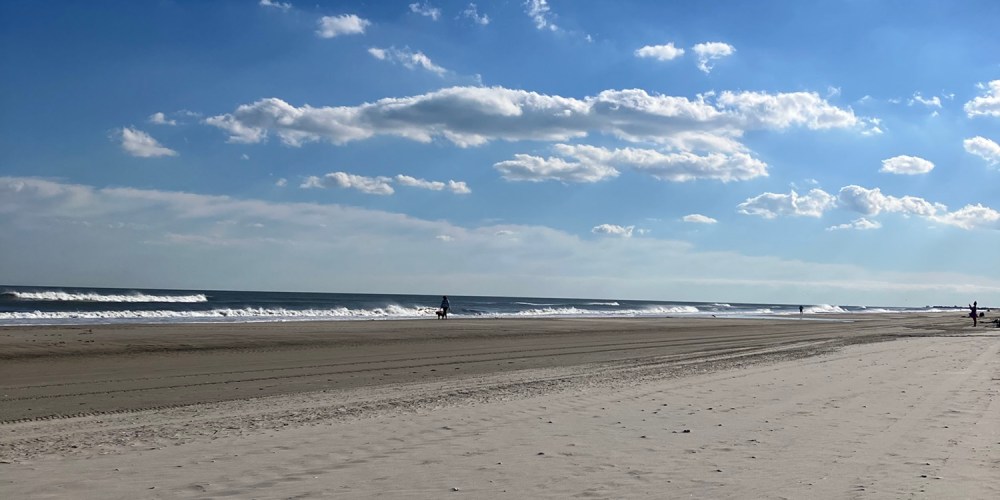
I’ll set a picture on this post to show you where I am, today, but that is not the only reason that I am grateful. I think that’s what Paul “learned,” and it is what I’m learning. If we can —— landscapes of thanks in our souls, then we start to see everything through those lenses… [that “——” is because I was looking for the right word. I first thought ‘cultivate,’ like gardens, where we till the soil, plant seeds, fertilize (feed) it with the right kind of good nutrients, then watch as the plant/flower/fruit/vegetable grows. We do the things to create an environment that will produce the kind of result we want. We don’t plant roses and expect tomatoes. We don’t plant resentment and bitterness and expect patience and kindness. But I could also use ‘forge,’ because we take a metal in raw form and put it under extreme heat, then hammer it into the shape or form we want. That certainly feels like it describes the process of human growth, doesn’t it. We are placed under stress, then beaten into new, sometimes shocking & unrecognizable creations. Both are purposeful, they don’t just happen. My yard has no apple trees or grapevines, because I haven’t planted them. The wrought iron railing at the school doesn’t look like an art installation.] …and what we end up seeing is grace. We see gifts everywhere we look. We notice beauty in all things. The little we might have suddenly become enough. Therewith we are content in everything.
The thanksgiving comes first, usually. We change the input for a more desirable output.
That’s where the law of attraction becomes useful. I don’t think it’s a law and the new-agey application can be selfish nonsense (ex: “I want a kajillion dollars or to play in the NBA.”) Just because we want something doesn’t make it true, but that doesn’t discount the entire theory. If I look for white Chevy Equinoxes (Equini?) on the road, I find them. If I look for people who are awesome and trustworthy and smart and funny, do you know what I find? Yep, awesome, trustworthy, smart, funny, people. If we look for beauty and grace, if we look for God’s love, we will always find it.
I used to think gratitude journals were pretty silly, but like most things, that said more about me than it did gratitude journals. And in actuality, the act of journaling, of writing in a book, might be the least important part of the process. If I know I have to write 3 things in my spiral diary of thanks, I am constantly aware of my life. Where are they? What am I thankful for? I walk around and interact with my life in a mindset of discovery. I am curious and open. And we never have trouble finding only 3.
It’s easy to be thankful and content with the Angel at the beach under a brilliant sun. As it turns out, it’s also not so hard to be thankful and content at home, on a rainy day, alone, when the Dallas Cowboys lose. It just takes more practice and an intentional focus. We can’t always change our circumstances, so that usually means the answer is that we are changed in those circumstances into grateful, content little fiery balls of love.
A Brand New Thought
I am giving this post the title “A Brand New Thought,” so that, when you see it, you go, “WOW, I wonder what BRAND NEW THING he’s thinking about,” and settle in to carefully read. But it’s not new. The title is what I’d call ‘shameless click bait.’ It’s sort of a dirty trick, but I’m not sorry.
Yesterday’s reading in the Bible In A Year plan included this beauty, from Ephesians 5:2, “Live a life filled with love, following the example of Christ.”
Just in case you forgot, and are thinking right now, “hm, what is love?” Welllll, “Love is patient, love is kind. It does not envy, it does not boast, it is not proud. It does not dishonor others, it is not self-seeking, it is not easily angered, it keeps no record of wrongs. Love does not delight in evil but rejoices with the truth. It always protects, always trusts, always hopes, always perseveres. Love never fails.” (That is taken from 1 Corinthians 13:4-8) I know we talk about this a lot, but for some reason, today it really hit me again, really got into my head and heart.
I’ll soon turn 51 years old (or have already turned 51, depending on when you read this). I really don’t care much about my birthday, except to use it as an excuse to reflect, examine, where I am and/or where I am going, who I am and/or who I am becoming. It’s exactly the same as New Years for me. That Ephesians 5:2 is in my reading seems like too much of a coincidence.
For most of my whole life, I’ve spent entirely too much time sitting in the idea that I am not enough. (1. Not enough? Of what? Of anything and everything. 2. What is interesting to me now is that this feeling – that I am not enough – is simultaneously a lie the enemy uses to tear me down, and the Truth of God’s redeeming work through His grace for me. Isn’t that fascinating, that something could be the Truth and a lie, depending on the context and Who/who is telling it?) My ChatGPT assistant Theo said I can get stuck on “fixing things,” and fixing them yesterday. My intense focus on my own growth in my faith, identity, in my relationships with Jesus, can become just another checklist, where I forget to be where I am, forget to experience joy, stare at the scenery passing instead of the beautiful miracle of now. (But as you may know, I also focus on mindfulness and not missing anything. Both of these seeming contradictions are true.)
So, what does the next year, 51, mean for me? What will I work on? Where’s the next step in my personal, spiritual evolution? Maybe I can simply slide those answers to the side, and simplify the vision. Maybe I’ll just think about the example of Jesus, and “live a life of love.” That’s it. No ruminating, no fixating, no overthinking. Just living this life of love. I am loved. All He does, every step, every word, was driven by His life of love. If I am to follow His example, maybe I can just love, too?
And that includes me. No more wanting to be further down the path, frustrated that I’m not where I’ve somehow decided I should be. I’m listening to a Bon Jovi song, “Just Older,” and the lyrics to the hook are: I like the bed I’m sleepin’ in And just like me, it’s broken in. It’s not old, just older. Like a favorite pair of torn blue jeans. The skin I’m in is alright with me. It’s not old, just older.
I am broken in, wrinkly like a Shar-pei. Notice, he likens his older, more wrinkled skin to a “favorite” pair of jeans. What if we could see us as Jesus sees us, would we see our experiences and (perceived) imperfections as the texture that makes us who we are, that makes us so awesome, that makes us our own “favorite?” Would we be patient and kind to ourselves? Always hope, trust, and protect ourselves?
Yes, yes, I know this is a stretch and we probably shouldn’t trust in ourselves, and definitely shouldn’t place our hope in ourselves, but maybe just give ourselves the benefit of the doubt, from time to time. Maybe don’t be so mean and demanding of ourselves? Maybe instead of the next task or step, we could just be patient and kind, and just live the life we’ve been given, based on the love we’ve been given? And we could just be grateful. Wouldn’t that make this the best year yet, the perfect illustration of the grace & freedom He (and only He) gives?
Of All These Questions
I’ve often referenced this hosting site’s prompts. Today’s is, “What’s the best advice you’ve ever received?” It’s easy, for me. My dad often used to tell me to “be very careful who you marry.” I think every young boy and girl should hear this as often as I did, over and over. I wrote a whole post on this particular wisdom of my dad on my other blog, and my last line was, “He passed away 20 years ago, but he did get to meet the Angel and come to our wedding, so he knew I listened.” I like that last line, I imagine he’s happy and proud of me to marry so far out of my league, and I’ve always imagined him, totally contented, knowing what a difference he, his life, his love, and his words made in my life.
[I didn’t expect to write all that, but I’m not too sorry. Yesterday, I spent a full, extraordinarily beautiful day with my mom, aunt, and sister, and I was thinking of him. Apparently, the AI prompt generator was, too.]
Anyway, in last week’s message, I asked a lot of questions. I always do, but there were more than usual on Sunday. And really, there’s only one that has taken up residence in my head, heart, and spirit. Only one that I ask several times every day. Perhaps, of all these questions, only one that truly matters.
Oh, that’s probably not true. I can think of at least 1 more that is certainly more important (we can talk about that one another time). But, maybe only 1.
The question is… IS it loving? Is this (word, thought, post, act, etc) loving? Or, to put it another way, am I loving? If we are to be walking, talking examples of agape…
[Agape is a Greek work for love that doesn’t care if you want to, if you feel like it, if you like the person, if anything. Agape just does. Agape loves neighbors and enemies, loves when it’s hard and when it’s “impossible.” Agape forgives and gives grace.]
…are we?
An hour on Sunday might not change our lives too much, no matter how cool and compelling the teacher might be, but if that teacher asks a question like “is it loving?” and we allow the Spirit within us to answer, to hold our hand and lead us toward the space where we might be able to say yes, then transformation is certain. If we can sit with these questions, honestly and with humility, we might find new pathways to awesome new destinations.
Incidentally, if that teacher asks questions like this, we can all be assured that the teacher has been on his knees, aggressively stretched for the last several weeks, laid bare, staring at the ceiling, asking himself the same questions. That teacher has been asking if his message is loving? Is it True and is it loving? And then that teacher is constantly examining everything for that answer, everywhere he goes, everything he says, thinks, does. Is it loving? Am I loving???
Yesterday, I drove my mom and aunt home from my sister’s home in rush hour through Philadelphia. Was I loving toward the other drivers? To the construction workers? To all involved in the gas price racket? To my passengers?
There’s no end to this: Am I loving to the Angel? To you, who might be reading this? To me? Are the thoughts I have ultimately loving, rooted in nothing less than agape?
…And what if they’re not? If I find that this post is NOT, would I delete these last few hours of work? What if I really want to publicly eviscerate the committee that decided we didn’t need that turning light, would I have the discipline to breathe and not push the “post” button? What if that person realllly deserves it? Is it loving?
Is this thing (whatever it is) love?
There is a terrific scene on the tv show The Office, where one of the characters, Dwight Schrute, says, “Whenever I’m about to do something, I think, ‘Would an idiot do that?’ And if they would, I do not do that thing.” Maybe we could all take a second to paraphrase his words during our day? Whenever we’re about to do, say, think, something, we could ask, Is it love? And if it’s not, we could not do that thing. And if we all did that, then what? What would our relationships and communities look like? What could be possible???
Like Stars
The Dallas Cowboys broke our hearts by losing to the hated New York Giants last night, and it made me think of that passage in Romans (why do I do the things I don’t want to do, and not do the things I want to do?). I would very much like to move on from the Dallas Cowboys, but I’m beginning to suspect I simply can’t, or won’t. What’s the difference between can’t & won’t, anyway, right? Probably nothing, that loss is devastating either way. Let’s move on.
I really want to continue to discuss the homework from Sunday. If we remember the Message translation of several verses in Matthew 5, “You’re here to be light, bringing out the God-colors in the world. God is not a secret to be kept. We’re going public with this, as public as a city on a hill. If I make you light-bearers, you don’t think I’m going to hide you under a bucket, do you? I’m putting you on a light stand. Now that I’ve put you there on a hilltop, on a light stand—shine!”
He brought us here to be light, put us on a light stand, on a hilltop, to bring out the God-colors of the world. We were never supposed to keep our identity or our faith private, keep God a great big secret, hiding under buckets. But you know what? I think we have been doing just that. Many of the light switches in my home have a small slider that dims the bulbs. I like to do that, because it can feel like I’m being interrogated. (I always think I’m hilarious when I say, either “Tell me what I want to know” or “I’ll never tell you anything,” depending on if I’m the one flipping the switch or not. Absolutely hilarious.) Sometimes, it’s better to have a nice soft glow in the evening. In fact, I think that’s the best thing for our circadian rhythms as we begin to wind down for bed.
However, we are not those light switches. The light inside us is never better as a nice soft glow. We are made to shine like stars. Of course, we might shine in different ways, but there isn’t one of us that doesn’t have it, that isn’t made to light up our surroundings. If we’re at work, shine. At home, school, the grocery store, gym, highway, shine. Always shine.
The next question is, what does shining look like?
Well, honestly, it looks like you.
There have been times where I want to say things, want to laugh out loud, want to give of myself, want to wrap my arms around another, want to cry, sing, dance, whatever… and I don’t because, what will they think? Maybe it’ll be taken wrong, misunderstood. Maybe they’ll get offended or judge me or something. And so I do the equivalent of wearing a bucket. I move that slider down, I dim the most authentic, coolest, most awesome version of me. I hide the man God has “wonderfully made,” the man God is forging, transforming, the man I am and am becoming.
You know, I can get pretty excitable on Sunday mornings. There were many weeks early on, as I was speaking, that a voice in my head started with the shame, trying to convince me that I was embarrassing myself. Tone it down, this is inappropriate in a church, that kind of thing. It was often loud and awfully convincing. This voice was also lying, holding a bucket and dimmer switch out for me.
After the Israelites reclaimed the Ark of the Covenant, when they were bringing it home, king David was dancing before it, through the streets, in front of everyone, and his wife Michal was horrified. She “despised him in her heart” for being so “undignified,” and tore him up when he got home. This was the voice in my head, Michal’s. David responded, “I will celebrate before the Lord. I will become even more undignified than this, and I will be humiliated in my own eyes.”
In other words, this man “after God’s own heart,” was going to shine, no matter what, no matter where, no matter when. In Matthew 5, Jesus gives us that same call. We’re called to live and love out loud, so let’s do that, all the time. (In Dallas Cowboys wins AND losses.) Let’s stop wondering what we’re supposed to look like, or how we should act, and just be exactly what He’s made us to be, and do exactly what He’s made us to do: Shine.
Now, What You Hear Is Not A Test
The Angel & I spent last weekend’s holiday at a Labor Day party/picnic/bocce ball tournament. The food and company were excellent, we lost both of our games badly, and I got to spend some time with my family. The soundtrack for this sacred time was a best of the ‘80’s playlist. During the Sugar Hill Gang’s classic hit “Rapper’s Delight,” I watched my cousins sitting next to each other across the yard. They weren’t talking, they were just moving individually, in perfect time (with the music and each other), and mouthing every word (which is really saying something, “Rapper’s Delight” is very, very long). This continued for quite a while, covering quite a few songs.
My family hasn’t always been this close, there was a too-many-year period where we were estranged. We used to live next door to each other, then we moved, things happened, grudges & resentments happened, distance happened, then another thing happened, that distance didn’t matter anymore and we were reconciled. As I watched them, I thought of all that. I thought of my sister, and the language that close relationships have that transcends language and time. I thought of us and how much we all missed, and how much we still miss, deciding some sort of thing or another was more important than this.
So, then, I started to think about the relationships we share, and the reasons they end (or are placed on pause). I wonder if we even remember the reasons. We remember the times we spent, the fun we had, the memories we made, together, but we usually have a much harder time remembering the nonsense that keeps us apart.
We’ve taken to reading the “love chapter” in 1st Corinthians 13 every Sunday. Love is patient and kind and doesn’t keep any record of wrongs and never fails. Do these characteristics describe each of our interactions & conversations, do they even describe our homes and/or marriages?? I said earlier that the holiday was a “sacred time,” and the worship music was “Rapper’s Delight,” and that was true. Every time love becomes the cause and the effect, the motivation and the result, of our lives, God is the main character, and we may as well call those spaces church. Every time our love asks us to lay our own interests, vanity, control, and need to win, down, and we respond by doing just that, it is absolutely church. When we hold each other, listen, laugh, play, cry, these things are all church, and wherever they happen is the temple of God.
I’ve been in churches full of bitterness and unforgiveness and I’ve been in bars and gyms full of support, encouragement and capital L love. Monday, that yard was a temple, a monument to the God who made us and sustains us.
You know what else I thought? That we live in a world (comprised of millions of homes, streets, neighborhoods, communities, districts, states, countries, planets, and galaxies) in desperate need of the message of Jesus, the love of Jesus, the Gospel of Jesus. And we need to be the so-called (for lack of a better term) “brand ambassadors,” of the Gospel. We need to sing & dance along to this divine Story, over and over again, being living examples of possibility instead of clinging to our own little stories.
I realize that this, of course, doesn’t come easy (and spiritual attack is, sadly, very real), and can be quite painful, but that is also part of the Story we happen to be in. That’s why we simply can’t continue to miss the most beautiful, inspiring parts just because we’ve chosen to be somewhere else, divided by who cares what. These are our lives and we are our people, church is anywhere & everywhere, “Rapper’s Delight” is awesome, and I am truly grateful for (or in) all of it.
The Why
You know how much I love a great site prompt. (The website that hosts this page gives a daily topic to encourage more engagement from me. They figure the more I write, the more you click & read, the more business they get, right? I don’t write every day, and probably won’t, but if the site prompts would be like today’s, maybe I’d revisit that, but they are sometimes questions like, “What is your favorite e-commerce site?”) Today’s question is, “Why do you blog?” What a beautifully introspective avenue to examine.
Is it because I like the clicks, visits, likes, and comments? Do likes equate to worth: the more likes I get, the more valuable I am? Maybe it’s because my name attached to something online is a form of narcissism, or maybe the narcissism is thinking my thoughts on anything are somehow necessary to your lives. Do I want to be an influencer, internet-famous, parlaying this blog into a YouTube site where I produce videos of my family and the products of sponsors, where you can “smash the like button,” share, and subscribe, making me rich beyond my wildest dreams?
I don’t think it’s any of those. I say “I don’t think,” because it’s always possible, isn’t it? We can be pretty selfish, with remarkably well-honed powers of rationalization that clouds our judgment until we don’t even know why we do what we do anymore. But I truly don’t think it’s any of those. (I don’t get too many likes, hardly any comments, and I have yet to get a check in the mail from The Internet.) I don’t think it’s one of those, because I think I know exactly why I do what I do, blogging or otherwise.
Last week, a very good friend and I recorded a podcast (it’s called “A New Thing,” and you can find it here, on her YouTube page: https://www.youtube.com/@DreamMythosStudios/podcasts I bet I’ll smash that like button and put it up everywhere, the second I figure out how to do that). It is the first in a conversation where we’ll take a spiritual/religious idea and discuss how it is still important today. I was going to say “if” it’s still important today, but I don’t ever wonder IF it is, I know it is, it just might take a moment of attention to see how. That’s the sort of thing we’re discussing. We’ll also get into popular songs, movies, art, whatever, everything, and see where and how that affects our beautiful spirits.
That podcast is a very recent perfect example of my Why. I happen to love Jesus and think He is The Answer. I think if we’d fall in love with Him, listen to & follow Him, our hearts would explode (grow 100 sizes in an instant), we’d all love each other and the entire world would change in a moment. He changed my whole life, and now, ideally, everything I say, do, or think would express that foundation. Every time you’d listen to that podcast, you’d know that I love Jesus, and that I love you. I would want to make you feel valued & safe, you’d know I think you’re awesome and important. I would listen and hug you a lot. I would try to explain the Ark of the Covenant (that was our 1st topic on the podcast) in a way that might help you see His love for you (for everyone, ourselves, our neighbors AND our enemies alike) and His pursuit. I try to do the same with the Bible on Sundays. I try to do this at the church, but I also want to do this at home afterwards, and at the grocery store on Mondays, and the gym everyday. I want to be a walking, talking, living illustration of The Gospel in every situation and space.
Of course, as you already know, I am not able to do that all the time (probably much, much less than I’d like). I can be an obstacle, I can fall, I can be a bad example of what love looks like, I’m not always patient and kind and I can really keep score – but even in that, it is my hope and intention that I can point to His grace, mercy, and forgiveness. In my failure, I can still express my foundation.
Sometimes, like here, today, I am very explicit in my belief. I am quite religious and will use religious examples to connect. But other times, I use Marvel movies, books, and pop songs. I am honest, to a fault, and anytime there’s anything to share, I over-share. I am grateful. I will love you and everybody else with no agenda. This isn’t to amass “like” smashes or paychecks, I love just because I do. Just because that’s how I’ve been created.
So, love. That’s why I write. But it’s more, it’s why I do anything.
1st Day
Today is the first day of school in my little circle. 3rd-5th grade children returned to the school where The Angel works, and classes began at Lycoming College for my youngest son. My oldest son is studying for his next new responsibility at work. And here I am, alone at home, writing, listening to the punk band Rise Against as loud as my speaker will comfortably go.
Life moves in rhythms. We soar along the clouds, plunge into the valleys, and take slow, sometimes boring steps in the flat straightaways. In the Church calendar, these are called sacred and ordinary times, and it has come to imply that some times are more charged with the Divine than others, that some Tuesdays are deeper than others, and that all Sundays are more spiritual than those Tuesdays. I disagree. Not with the idea that there are rhythms to life, it seems pretty silly to argue about that, but instead, with the assumption that there are places, spaces and times where God is not, or at least, where He is less.
Is the opening of classes today common, ordinary time? Or is this the sacred & holy? Was our wedding day more sacred than this Monday morning, 25+ years in, standing on our porch, me taking her 1st day picture, before we walked to her car and shared a soft smooch? Was last Friday moving my son into the dorm charged with big, heavy meaning and significance, or was it the day before when we all ate dinner together, played Pictionary, and went disc golfing?
I’m more and more certain that “ordinary” time is simply the moments and days, seasons or years, where we fall asleep or lose our vision.
If my oldest son can’t see the hand of God on his work, or even more importantly, on his life, then it truly is common. However, I can, and they are anything but common. They are miracles, he is a miracle. What about the kids that come into that elementary school today, terrified and alone, who find The Angel’s luminous smile that can stop a clock and her arms that will bring safety and solace to those storms raging in those little hearts? Does that sound ordinary? Do you think it’s ordinary to those kids?
We just forget to see.
I am here, alone in my chair, with this computer and these words. The song currently playing is called “Historia Calamitatum,” and here are the lyrics to the hook: “When it rains it pours Like summer storms, the skies as grey as leaves. The rivers flood the banks and spill into the streets. But the people laughed and swore that they’d restore The city piece by piece. And then the clouds gave way as if to agree. When it rains it pours.” If you heard it, you might let it play and miss that devastating poetry. That would be heartbreaking. But even if we do hear this song, how many songs do we miss?
There is nowhere God isn’t, nowhere there is less of Him.
Even in our sadness and tragedy. Even in our pain. Even in the news and on Facebook. Jesus says, “Whoever has ears, let them hear,” and I don’t think He was only talking about His parables. I think, maybe, He was referring to baseball games, punk rock songs, tv shows, sunsets, mangoes, Tuesdays AND Wednesdays (and all other days), wedding days, 1st days and every days. I think He was probably referring to everything He has made, trees, streams, red-eared slider turtles, families, neighbors and even enemies.
Ordinary time is likely intended as a way to protect against our tendency to want (or expect) every day to be fireworks and movie scenes, to want every song to be “There Is A Light That Never Goes Out.” And it is probably supposed to point us to the presence of God even in the “ordinary.” But I think we went too far, lost that point, believed the opposite, and went to sleep.
The revolution of His Kingdom begins when we start to wake up to the Divine, sacred, holy reality all around us.
Benediction
It’s a little later in the week than I typically like to post. I write on Mondays, when the message is fresh and I’m refocusing on the week ahead. It’s a cool way for us to connect – I reach out to you right away and you have the rest of the week, if you decide you want to check in at all.
I heard this kind of communication is actually one of the characteristics of modern communication that has far-reaching consequences. When we are face to face (or even on the telephone), we send messages (verbally, physically, and countless other ways), they are received and reacted to immediately. If I say something that hurts your feelings, I see it, and we both have the opportunity/responsibility to address the hurt right now. You don’t really get the chance to hide it or pretend, because if I’m present and paying attention, your cues give you away. We both build all kinds of interpersonal skills through this synchronous dance. Nowadays (do I sound like somebody’s grandfather???), we send texts or emails and they are responded to sometime later. The receiver gets the chance to edit their responses, and the sender may not ever know the wound he/she inflicted. We lose so much in this asynchronous communication, it’s like the medium creates AND requires a disconnectedness.
This affects our ability to be present in situations and especially with each other. I am writing later in the week because I have chosen this week to be wholly present at home with my youngest son, who returns to college this week. (Really, it may more accurately be stated that I have chosen to be wholly present all summer. You may have noticed this, in any number of ways.)
I just want to share a few thoughts with you, and then give a sort of benediction. A benediction is the end of a church service where someone gives a parting thought, a blessing. It usually begins with “May you ____” At the Bridge, ours is always taken from the book of Numbers (ch. 6, v. 24-26, ending with “[May] The Lord lift up His countenance upon you and give you peace.”)
I often talk about a 2 Hands faith. This means we are invited to hold all of the emotions that come with living a completely present human life. Being an actual authentic human being is complex and complicated. We can be lots of different things, experiencing wildly different emotions from one second to the next. They are all ok, all welcome, and integrate into us (sometimes not so easily) making us fully aware and empathetic.
A great example and the one that I am swimming in right now is bitter-sweetness. “The bittersweet side of appreciating life’s most precious moments is the unbearable awareness that those moments are passing.” Marc Parent wrote this. I have no idea who this is, but it came to me through Brene Brown’s brilliant Atlas of The Heart book.
My son and I are very close, I love him dearly, am so proud of him, and really enjoy his company. He is absolutely ready to leave, start his adult life and change this world. I want him to go, I’m excited for him to go, we are celebrating – he loves college, is responsible, and will be able to fly – and I’m heartbroken. This kind of heartbreak has its roots in the richest, most wonderful soil of gratitude. I don’t want him to stay, I want him to become all he’s been created to be, and I will be his biggest fan and admirer as he goes.
And it hurts like crazy.
I don’t ever pretend it doesn’t, because to pretend otherwise is to introduce dishonesty into this sacred space, where it most certainly doesn’t belong. We have been given these gifts by The Creator of The Universe, He’s given them in love, why would I hold back anything? Why would I hold back joy? How could I possibly put dimmer switches on my gratitude? He gave me this great big, soft heart, He gave me this boy to love, to raise and to let go, and asks me to hold all of this out loud, so that is exactly what I’m going to do.
We’re playing games this week, shopping for school/dorm stuff, eating meals, disc golfing, and laughing. 2 nights ago, we played basketball in the driveway, like we always have, and the old man soreness I feel is 1. Not that nice, and 2. The most beautiful ache. He plays video games in the next room and I can see him while I writes to you, and that brings us to the benediction…
May we be courageous enough to enter into these relationships, and be present to the kind of searing pain that comes with such a deep, wide love. May we experience all the fullness of emotion that comes with the blessings of these human lives. May we be torn in gratitude.

